

Let Me Be Measured by What I Lost
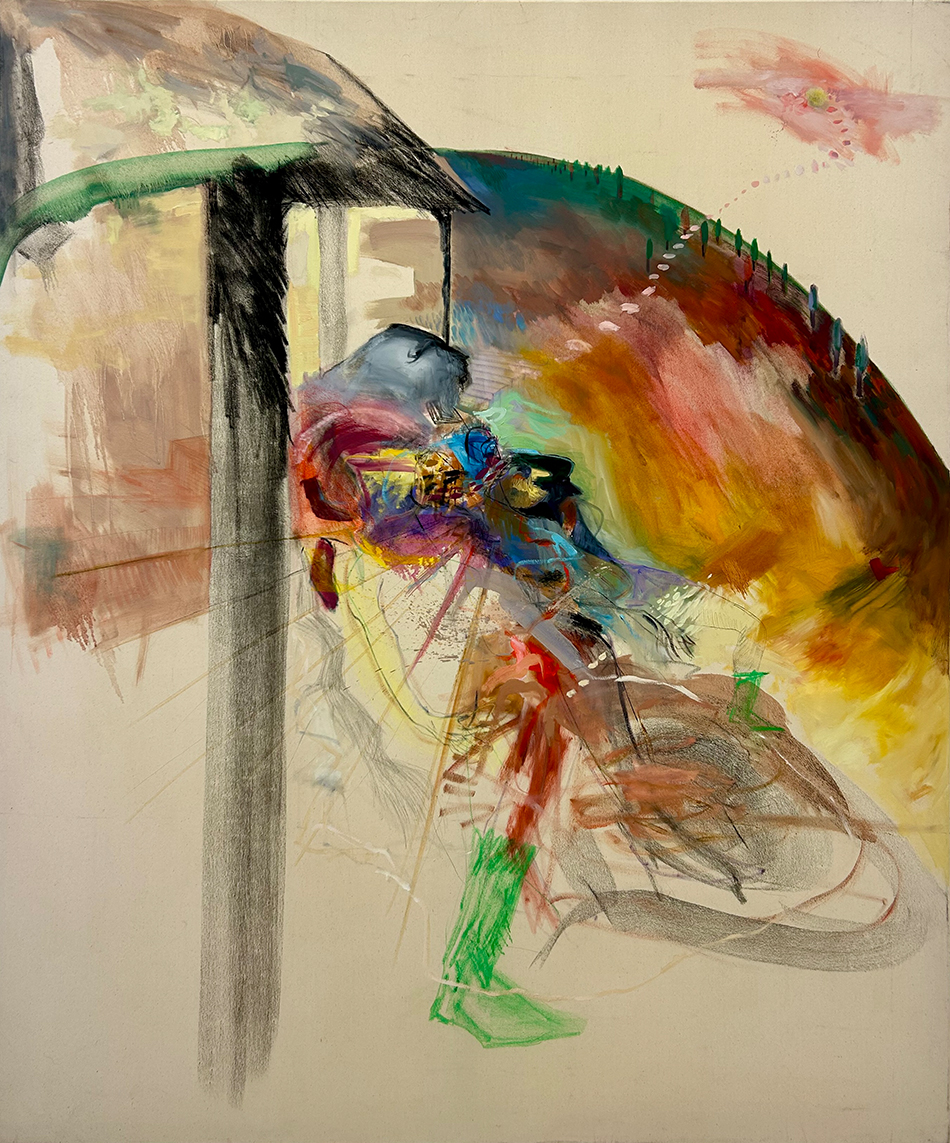
A red cent quietly defected from my pocket. I heard nothing as it touched the ground; the barcode scanner carried on with its soft, swallowing beeping. I watched the coin make its small dance across the supermarket floor before coming to rest.
I stayed where I was.
The woman behind me in the queue shifted her weight. I felt the correction coming before I heard it. “You dropped money.”
I gave a lukewarm shrug.
She tried again. “You shouldn’t be this careless. If you drop a cent a hundred times, that’s a lot of money.”
One hundred cents. My mind summoned an image from childhood. Uncle Scrooge swimming up and down through his vault of gold coins. Aren’t a hundred cents still just one euro?
In Berlin, people seemed eager to instruct me in the proper way of doing things. On my first day, I tried to pay a restaurant bill by Visa. The waiter raised his voice, “In Germany, we don’t pay with Visa.” What stayed with me was not the digital backwardness, but the need to remind me where I was.
I once saw something similar in another Berlin. On Ku’damm, a woman in a beige trench coat drifted past polished shop windows, then bent down to pick up two copper cents from the pavement. She was worlds apart from the woman performing the morning sermon. Still, she bent down. Wer den Pfennig nicht ehrt, ist des Geldes nicht wert. Even in the old heart of affluent West Berlin, someone was guarding the smallest crumbs of fortune.
The truth is, I never learned to tend to small change. One birthday, a friend gave me a piggy bank in the shape of a Karl Marx bust, as if to gently suggest I should start saving something, anything. I only ever fed it the gold coins; the red cents stayed loose in my pockets and often ended up on pavements. Marx watched over it all like a disappointed father figure, resigned but not entirely unsympathetic. Saving is a luxury muscle; one you only build when there is something left to keep.
I like to observe people’s groceries on the conveyor belt. The small declarations of their day. A ready-made meal for one. Plastic divider. Vegetables. Rice. Herbs. Ingredients waiting to come together. I hesitate before placing the divider myself. It feels like erecting a little wall between our groceries, a border. But everyone still reaches for it.
A German friend once told me he enjoys going to the supermarket every day. It gives life structure. Fresh produce. Nothing ever runs out. The basket stays light, the receipt stays short. “The guilt doesn’t accumulate,” he said, with the calm of someone liberated by routine. In German, guilt and debt share the word Schuld. I wish I had that kind of discipline, but I wait until there is almost nothing left in the fridge.
As a new migrant in Berlin, I found supermarket aisles overwhelming. I thought I knew what I needed, and suddenly there were endless brands of milk, cheese and toothpaste, variations of the same few ingredients. The products looked the same, each pretending to be different. The aisles overwhelmed me first, then hypnotised me.
Price tags for the same product announce €2.20, €2.45, and I wonder how such small differences can be so heavy. A few cents here, a few cents there, and somehow the receipt grows long enough to feel like an indictment. By the time I reach the cashier, I feel both relieved and defeated.
I leave for another supermarket to buy the Oriental-scented shower gel I like, then cross the city again for the right kind of fava beans. No supermarket keeps its promise of abundance.
I didn’t want to produce capital for someone else. I wanted to make meaning, not money. Somewhere along the way, that became a life of underpaid jobs and freelance gigs. I preferred workshops, classrooms, community centres and art spaces to companies and government offices. The work paid in visibility and gratitude. I gave up wealth in the present, trusting that another kind might arrive later. It is a good story, one I have repeated often enough that it almost sounds true.
Still, I end up in the aisles, comparing oat milk prices, wanting things, choosing between them, paying for them. I may have refused one role in the system, but I still take my place in it as a consumer.
Everyone recycles in Berlin, even their virtues. The Pfandflaschen system is one such civic ritual. Return the bottles, get the coins, save the planet, be a good citizen. I flinched at the thought of being seen carrying them to the supermarket, the plastic bag rattling with need, afraid of being mistaken for someone collecting bottles to survive.
Even now, I rarely return them, which makes the journey heavier. The bag gets too full, too close to tearing. Then comes the dreadful moment at the machine when it spits back a bottle. As if to say, Try harder, foreigner. Learn the deposit matrix. Every bottle it accepts feels like absolution; every rejection, a public sin.
Once, I was walking with a plastic bag full of bottles to return when one slipped out and rolled across the pavement in slow, humiliating circles. I kept walking. A young man picked it up and jogged over to hand it back. He had to call after me twice before I stopped. I wanted to be noticed in public for something other than a small disaster.
I accepted the bottle and offered a queasy “Danke.”
My mother loves to go shopping. Her taste always has warmth. She especially loves havan, the word we use in Egypt for a rich milk-chocolate brown, the kind of colour she finds effortlessly chic. It carries a faint Cuban feeling, as though Havana had become a colour. I remember it best on her endless handbags and shoes. She isn’t reckless, just extravagant in spirit. She buys things for the feeling: the thrill of choosing, of carrying something home, of saying, “I’ll take it.”
Shopping was my mother’s way of insisting that tomorrow will arrive, a kind of squandering disguised as investment. She bought as freely for herself as she did for her children and grandchildren. On her only visit to Berlin, I took her to see Nefertiti, the queen German archaeologists exiled from Egypt and Hitler decided to keep. I took her to lush parks, even on a Spree cruise. Nothing excited her as much as a Primark shopping spree.
I spent years avoiding shades of brown because wearing them felt like becoming a little too much like my mother. Last winter, after slipping into a brief state of hypnosis, I came home from the mall with a havan-coloured jumper. I didn’t realise what I’d done until I caught myself in the mirror.
Her colour chose me again.
I wanted to tell the woman in the supermarket that I had dropped heavier things. Countries I left behind. Keys to apartments I could never return to. Family, friends, and lovers. But the queue is not a confession booth. If, by her logic, every small loss adds up, I must have lost a fortune.
Perhaps she wasn’t wrong. Maybe nothing we lose ever really disappears. I may not be good at counting money, but I do count hours, days, departures. I have watched important things slip from my hands and had no choice but to keep walking. I know some losses do not make a sound until much later.
Some people hoard coins. I collect things worth less at the cashier, like memories. Maybe both of us, the careful and the careless, the keepers and the droppers, are performing the same ritual of keeping score. She reaches for what can be kept. I linger over what cannot.